

- Лазеры
- Волоконные фемтосекундные
- Титан-сапфировые фемтосекундные
- Yb твердотельные фемтосекундные
- Хром-форстеритовые фемтосекундные
- Параметрические генераторы
- Многоканальные твердотельные
- Фемтосекундные и CW конструкторы
- Непрерывные и диодные лазеры
- TiC. Непрерывный Ti:S
- TiC-D. Титан-сапфировый непрерывный лазер с диодной накачкой
- TiC-SF. Непрерывный титан-сапфировый одночастотный лазерный конструктор
- TiC-VLM. Непрерывный Ti:S с волоконной накачкой
- TEMA-CW. Непрерывный Yb
- CrF-CW. Непрерывный Cr:F
- DLM-MM. Многомодовый диодный
- DLM-DR. Лазерный драйвер
- Фемтосекундные усилители
- Диагностика
- Компоненты
- Селекторы импульсов
- Фазово-частотная привязка
- Изоляторы и ротаторы Фарадея
- Генераторы гармоник
- Компенсаторы дисперсии
- Система стабилизации пучка
- Оптические ослабители
- Оптомеханические модуляторы
- Генераторы суперконтинуума
- Генераторы ТГц излучения
- Лабораторное оборудование
- Лабораторная модульная сканаторная портальная платформа
- Оптомеханика и оптика
Статьи
Этот раздел находится в стадии наполнения. В данном разделе размещены ссылки на некоторые научные статьи, эксперименты в которых были проведены с помощью оборудования, поставленного нашей компанией.
Лазеры
- Ti:sapphire laser synchronised with femtosecond Yb pump laser via nonlinear pulse coupling in Ti:sapphire active medium
- Femtosecond Er3+ fiber laser for application in an optical clock
- Efficient source of femtosecond pulses and its use for broadband supercontinuum generation
- Self-mode-locking in erbium-doped fibre lasers with saturable polymer film absorbers containing single-wall carbon nanotubes synthesised by the arc discharge method
- Fabrication of superconducting nanowire single-photon detectors by nonlinear femtosecond optical lithography
- Highly effective 525 nm femtosecond laser crosslinking of collagen and strengthening of a human donor cornea
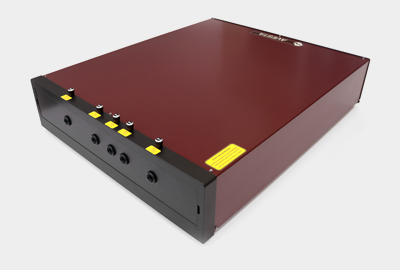
| Длина волны | 1050 / 525 / 700-1000 нм |
| Средняя мощность | 1000 мВт / 500 мВт / 1500 мВт |
| Длительность импульса | 200 / 200 / 100 фс |
| Частота повторения | 80 МГц |
| Джиттер между каналами | <1 фс |
N.V. Didenko, A. V. Konyashchenko, D. A. Konyashchenko, P. V. Kostryukov, I. I. Kuritsyn, A. P. Lutsenko, A. O. Mavritskiy
A laser system utilising the method of synchronous pumping of a Ti : sapphire laser by a high-power femtosecond Yb3+-doped laser is described. The pulse repetition rate of the Ti : sapphire laser is successfully locked to the repetition rate of the Yb laser for more than 6 hours without the use of any additional electronics. The measured timing jitter is shown to be less than 1 fs. A simple qualitative model addressing the synchronisation mechanism utilising the cross-phase modulation of oscillation and pump pulses within a Ti : sapphire active medium is proposed. Output parameters of the Ti : sapphire laser as functions of its cavity length are discussed in terms of this model. A laser system utilising the method of synchronous pumping of a Ti : sapphire laser by a high-power femtosecond Yb3+-doped laser is described. The pulse repetition rate of the Ti : sapphire laser is successfully locked to the repetition rate of the Yb laser for more than 6 hours without the use of any additional electronics. The measured timing jitter is shown to be less than 1 fs. A simple qualitative model addressing the synchronisation mechanism utilising the cross-phase modulation of oscillation and pump pulses within a Ti : sapphire active medium is proposed. Output parameters of the Ti : sapphire laser as functions of its cavity length are discussed in terms of this model.
Keywords: synchronous pumping, femtosecond pumping, Ti:sapphire laser, cross-phase modulation.
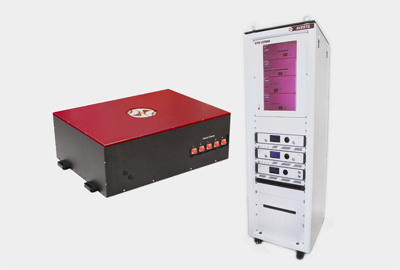
| Спектральный диапазон | 520-2200 нм |
| Частотный интервал (Frep) | 125 МГц |
| Диапазон перестройки частоты отстройки (Fceo) | >125 МГц |
| Стабильность привязки | 5*10^-13 на 1 сек |
M. A. Gubin, A. N. Kireev, A. V. Tausenev, A. V. Konyashchenko, P. G. Kryukov, D. A. Tyurikov, A. S. Shelkovikov The main elements needed for the realization of a compact femtosecond methane optical clock are developed and studied. A femtosecond laser system on an Er3+ fiber (λ = 1.55 μm) contains an oscillator, an amplifier, and a fiber with a relatively high nonlinearity in which the supercontinuum radiation is generated in the range 1–2 μm. In the supercontinuum spectrum, the fragments separated by an interval that is close to the methane-optical reference frequency (λ = 3.39 μm) exhibit an increase in intensity. The supercontinuum radiation is converted into the difference frequency in a nonlinear crystal to the range of the methane-reference frequency (λ = 3.3–3.5 μm), so that the frequency components of the transformed spectrum have sufficient intensities for the subsequent frequency-phase stabilization with respect to the methane reference. A system that stabilizes the pulse repetition rate of the femtosecond Er3+laser is also employed. Thus, the repetition rate of the ultrashort pulses of the femtosecond fiber laser is locked to the methane reference. The pulse repetition rate is compared with the standard second. Thus, the scheme of an optical clock is realized.
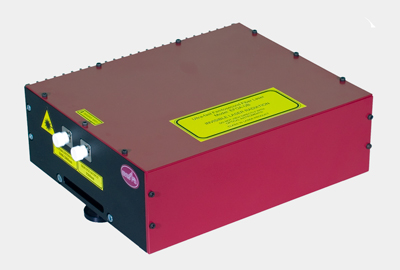
| Ширина перекрываемого спектра | 1100-2000 нм |
| Средняя выходная мощность | >150 мВатт |
| Частота повторения | 50...70 МГц |
Anton V. Tausenev, P. G. Kryukov, M. M. Bubnov, M. E. Likhachev, E. Yu. Romanova, M. V. Yashkov, V. F. Khopin and M. Yu. Salganskii A femtosecond Er3+-doped fibre laser system is developed and studied. The system contains a master oscillator operating in the pulse stretching regime, an amplifier of chirped pulses, and a device for pulse compression. The laser emits 1.55-μm, 100-fs, 90-mW pulses with a pulse repetition rate of 25 MHz. The setup was used for supercontinuum generation in an optical fibre heavily doped with GeO2. The width of the generated supercontinuum was close to an octave.
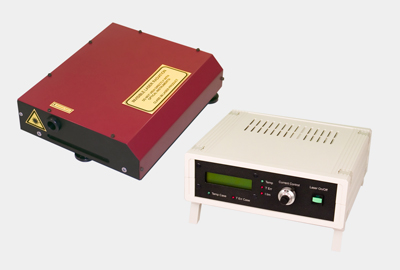
| Длина волны | 1560±10 нм |
| Длительность импульса | от 50 фс до 5 пс |
| Средняя мощность | от 10 мВт до 5 Вт |
| Частота повторения | 25...80 МГц (фикс.) |
Anton V. Tausenev, Elena D. Obraztsova, A. S. Lobach, A. I. Chernov, Vitalii I. Konov, Aleksandr V. Konyashchenko, P. G. Kryukov and Evgenii M Dianov We studied the ring and linear schemes of erbium-doped fibre lasers in which passive mode locking was achieved with the help of saturable absorbers made of high-optical quality films based on cellulose derivatives with dispersed single-wall carbon nanotubes. The films were prepared by the original method with the use of nanotubes synthesised by the arc discharge method. The films exhibit nonlinear absorption at a wavelength of 1.5 μm. Pulses in the form of optical solitons of duration 1.17 ps at a avelength of 1.56 μm were generated in the ring scheme of the erbium laser. The average output power was 1.1 mW at a pulse repetition rate of 20.5 MHz upon pumping by the 980-nm, 25-mW radiation from a laser diode. The pulse duration in the linear scheme was reduced to 466 fs for the output power up to 4 mW and a pulse repetition rate of 28.5 MHz. The specific feature of these lasers is a low pump threshold in the regime of generation of ultrashort pulses.
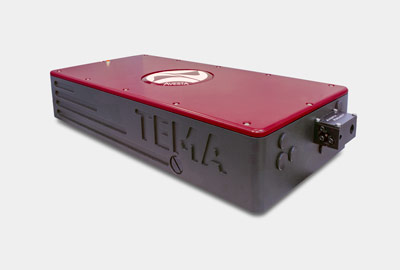
| Длина волны | 1050 нм |
| Длительность импульса | 70...150 фс |
| Средняя мощность | 12 Вт |
| Частота повторения | 80 МГц |
N. V. Minaev, M. A. Tarkhov, D. S. Dudova, P. S. Timashev, B. N. Chichkov and V. N. Bagratashvili This paper describes a new approach to the fabrication of superconducting nanowire single-photon detectors from ultrathin NbN films on SiO2 substrates. The technology is based on nonlinear femtosecond optical lithography and includes direct formation of the sensitive element of the detector (the meander) through femtosecond laser exposure of the polymethyl methacrylate resist at a wavelength of 525 nm and subsequent removal of NbN using plasma-chemical etching. The nonlinear femtosecond optical lithography method allows the formation of planar structures with a spatial resolution of ~50 nm. These structures were used to fabricate single-photon superconducting detectors with quantum efficiency no worse than 8% at a wavelength of 1310 nm and dark count rate of 10 s−1 at liquid helium temperature. Keywords: optical lithography, nanostructures, single-photon detector, femtosecond lithography
| Длина волны | 1050 нм |
| Длительность импульса | 70...150 фс |
| Средняя мощность | 12 Вт |
| Частота повторения | 80 МГц |
B.S. Shavkuta, M.Y. Gerasimov, N.V. Minaev, D.S. Kuznetsova, V.V. Dudenkova, I.A. Mushkova, B.E. Malyugin, S.L. Kotova, P.S. Timashev, S.V. Kostenev
Усилители
- Прототип атомного зонда с лазерным испарением
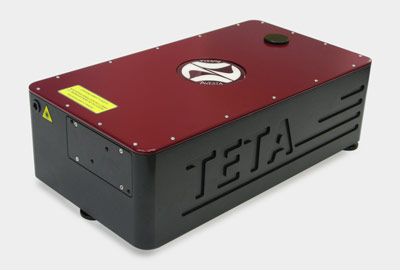
| Средняя мощность | до 50 Вт |
| Длина волны | 1035 нм |
| Энергия в импульсе | >2 мДж |
| Частота повторения | до 1 МГц |
| Длительность импульса | <180 фс |
С. В. Рогожкин, А. А. Алеев, А. А. Лукьянчук, А. С. Шутов, О. А. Разницын, С. Е. Кириллов Представлены результаты разработки, создания и испытания прототипа атомного зонда с фемтосекундным лазерным испарением и позиционно-чувствительным микроканальным детектором с линиями задержки для томографического (3D) анализа химического состава материалов. В основе метода атомно-зондовой томографии лежит принцип поатомной “разборки” материалов и проекционного увеличения, использовавшегося ранее в полевой автоионной микроскопии, а также времяпролетная масс-спектрометрия, примененная к каждому испаренному иону. На примере исследования вольфрама продемонстрированы возможности прототипа: разрешение по массе, пространственное разрешение и эффективность сбора данных.
Диагностика
Компоненты
- Efficient amplification of a femtosecond Ti:sapphire laser with a ring regenerative amplifier
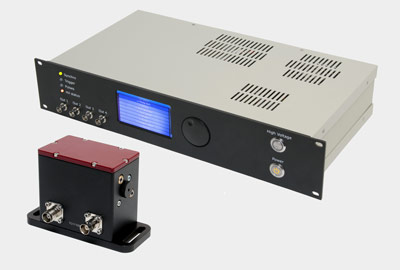
| Возможный диапазон рабочих длин волн | 200...2700 нм |
| Выходная частота следования | до 1 МГц |
| Время нарастания | от 700 пс |
| Чистая апертура | до 20 мм |
| Контраст | >1500:1 |
Новости
Новый флагман ТЕТА-50
Мы рады представить новую модель семейства ТЕТА — ТЕТА-50. Система способна выдавать энергию в импульсе на уровне 1 мДж на частоте следования до 50 кГц и длительности импульса не более 200 фс, что составляет около 5 ГВт пиковой импульсной мощности. Средняя оптическая мощность системы составляет 50 Вт в диапазоне частот 50-200 кГц. Возможны модификации с […]
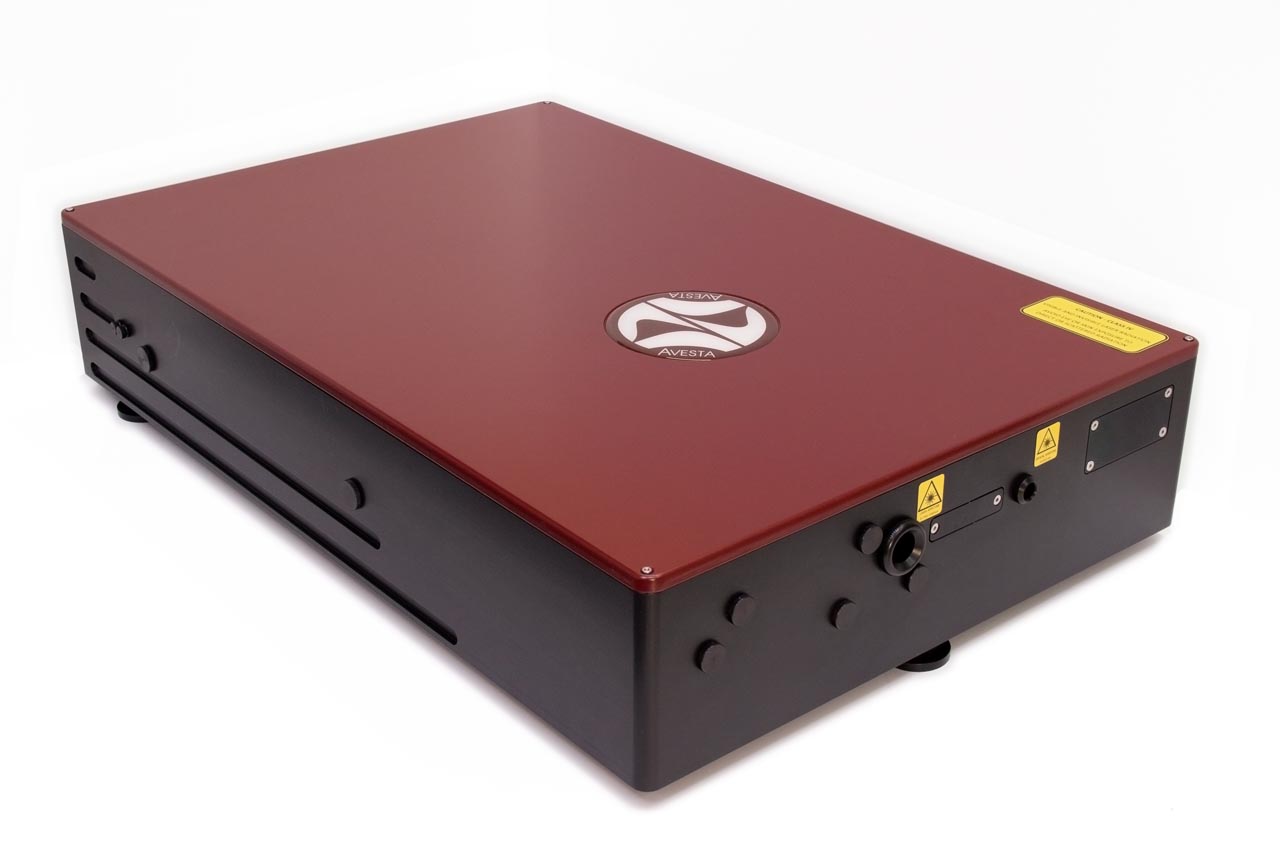
Новая модель титан-сапфирового осциллятора с выходной мощностью 3 Вт
Наша команда инженеров нарастила выходную мощность лазеров серии TiF-100 до более чем 3 Ватт на 800 нм, 80 МГц при длительности импульса менее 100 фс. Диапазон перестройки такой системы был расширен до 720-950 нм, по запросу также возможен более длинноволновый диапазон 850-1040 нм. В систему интегрирован высокомощный малошумящий лазер накачки. Такая система хорошо подойдет для самых требовательных […]